
My Top Tips For Shopping at Whole Foods
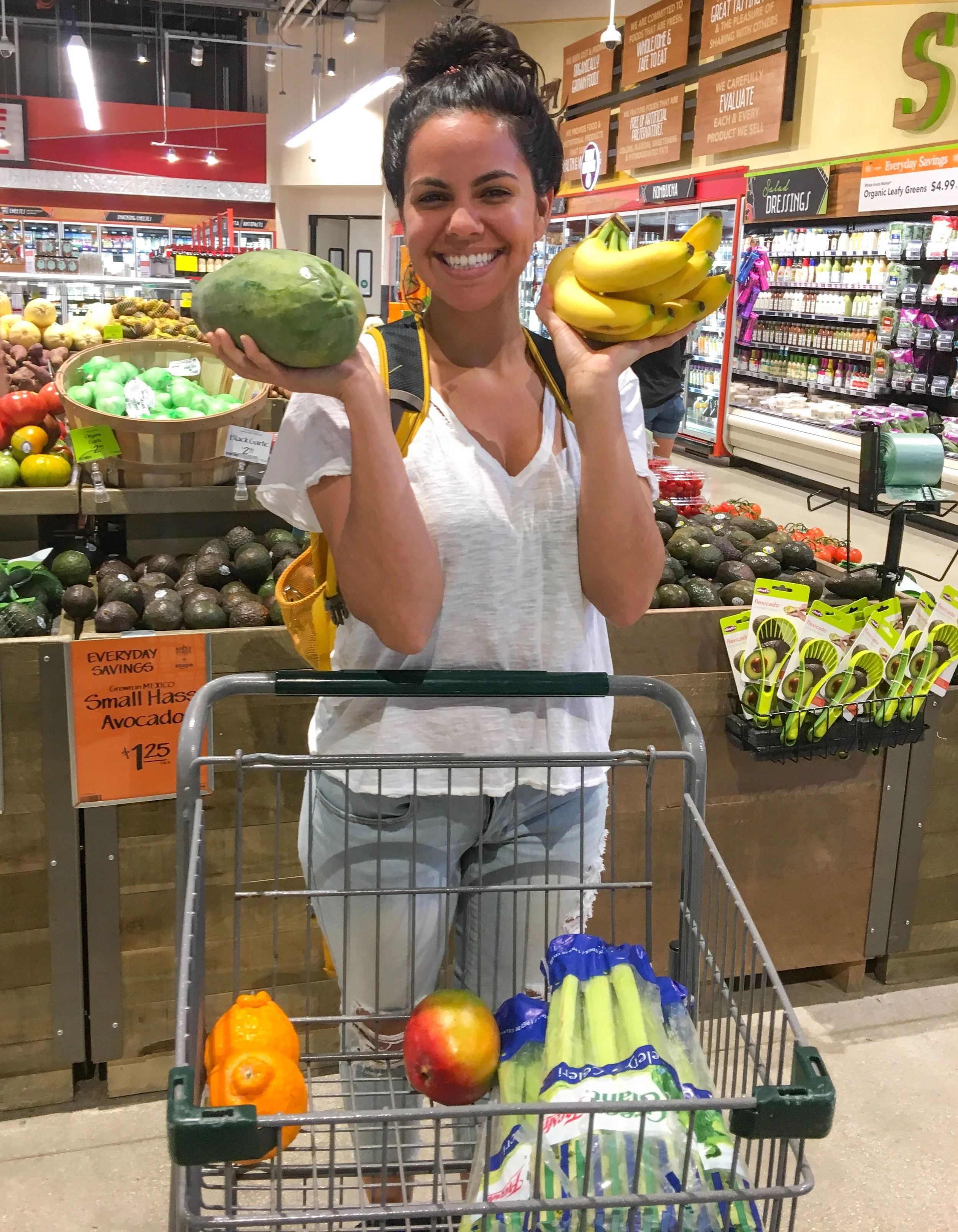
Looking for some secret tips and tricks for shopping at Whole Foods Market? You’ve come to the right place! My name is Janelle and I’m obsessed with conscious food and travel.
Whole Foods Market is one of my favorite conscious retailers. As an ex-marketing team member of America’s healthiest grocery store, I know a thing or two about savvy shopping here. And although I no longer work for them, this company continues to inspire me to be more mindful when making purchasing decisions.
This guide will help you to shop more consciously, save money and understand why Whole Foods Market is sometimes more expensive than our conventional grocers.
Here are my top tips for shopping at Whole Foods Market:
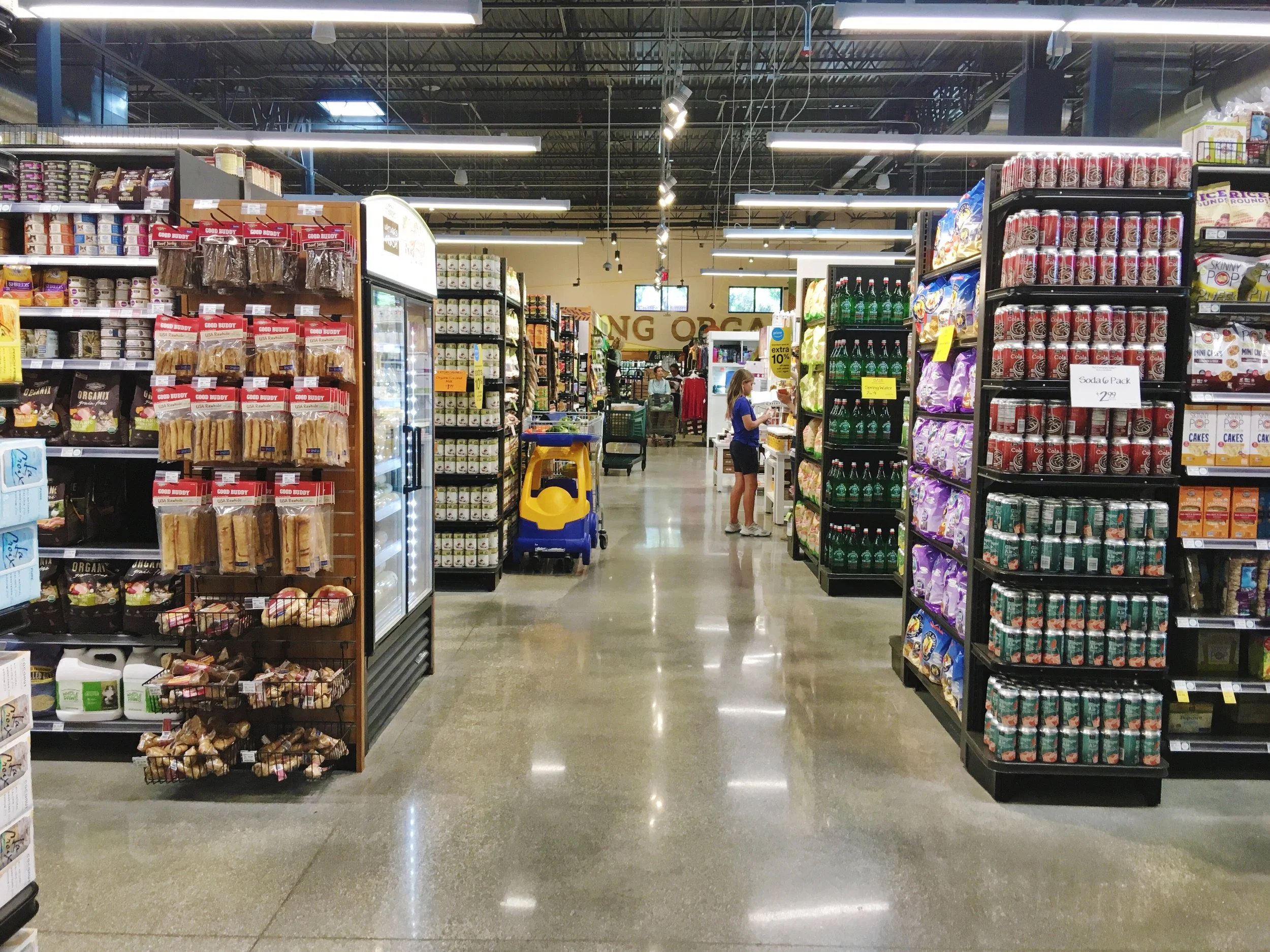
Get There Early on a Wednesday
The best time to shop at Whole Foods Market is on Wednesday mornings. Why? Because that’s when new sales are released—every Wednesday. Not only do you get first dibs on sales, but the store has had it’s weekly face lift.
Team members have been working through the night and early morning to make sure new sales are prominent on the sales floor and the shelves are stocked to the brim. It’s my favorite time to stroll the aisles and take in all of the natural and organic beauty.
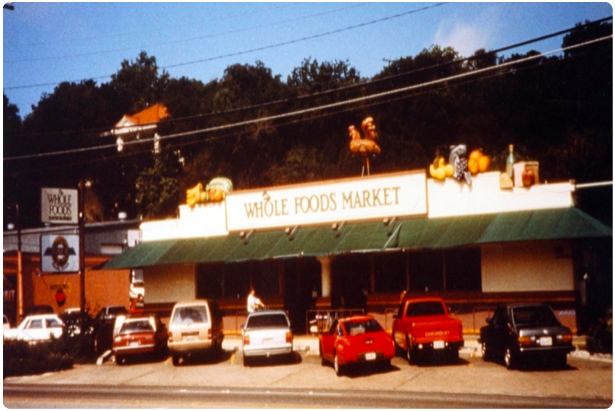
The first Whole Foods Market in Austin, TX (source: wholefoodsmarket.com)
Shop Often
It’s common in America to do a big shop once a week, typically on Sundays. We visit our local supermarket, stock up for the week and end up throwing our unopened bag of spinach in the garbage. (Don't lie—I know you do.)
But this concept of a supermarket and a weekly shop is fairly young and unique to America. Piggly Wiggly was not only the first supermarket in America, it was the first supermarket in the world. It opened Sept. 11, 1916 in Memphis, Tennessee and it revolutionized one-stop, self-service shopping. (The first Whole Foods Market opened in 1980 in Austin, TX.)
In most parts of the world people are still shopping like our American ancestors. They hop from the butcher, to the fishmonger, to the fruit stand, to whatever specialty shop has what they need pretty much everyday. As convenient as the supermarket is, it has its cons. Like the fact that we tend to overbuy (or buy things we don’t need at all) when we shop only once a week, which is a waste of money and product.
We can avoid this by treating our local supermarket like a specialty shop, shopping 2-3 times a week. This way we purchase only what we need when we need it, keep perishable items fresh and in turn, save money because we’re less likely to throw away food.
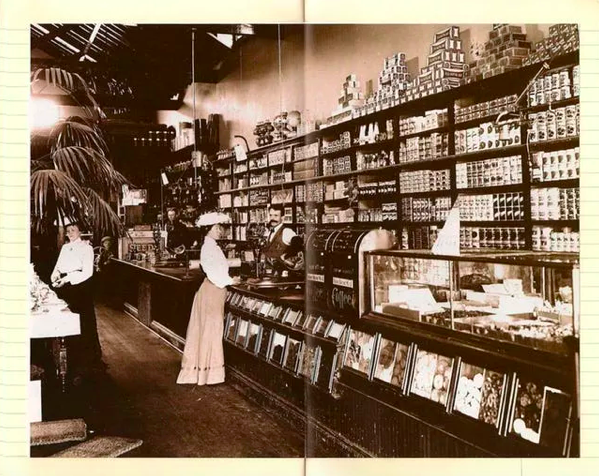
Pre-supermarket days before shopping baskets and carts (source: omgfacts.com)
Read the Labels. All of Them.
Piggly Wiggly introduced a brand new way of choosing food products. You see, customers used to pass a list of items to a clerk at a shop who would then select the items and hand them over to the customer already bagged (see photo above). But with the new supermarket concept customers now had to do their own choosing and shopping, and the items had to be attractive.
This was the beginning of food marketing and branding. Ingredients became less prevalent and what took precedence was what caught the eye. Customers were never educated on how to read food labels and to this day, we’re still teaching ourselves what the hell half the sht is in our food.
Every single product at Whole Foods Market has:
NO artificial flavors
NO artificial coloring
NO artificial sweetener
NO artificial preservatives
NO hydrogenated fats
Still, it SOOOO important you know how to read food labels and actually read them. Even with the natural and organic food movement on the rise, food companies still find ways to deceive. A good amount of groceries at Whole Foods Market are laden with cane sugar (granted, it’s not artificial, but do we really need sugar in our pasta sauce?!).
And if you’re trying to avoid GMO, again, check those labels. Whole Foods Market requires every vendor to note whether their item has GMO ingredients or not. They never claimed to be perfect, but they are honest and committed to GMO transparency.
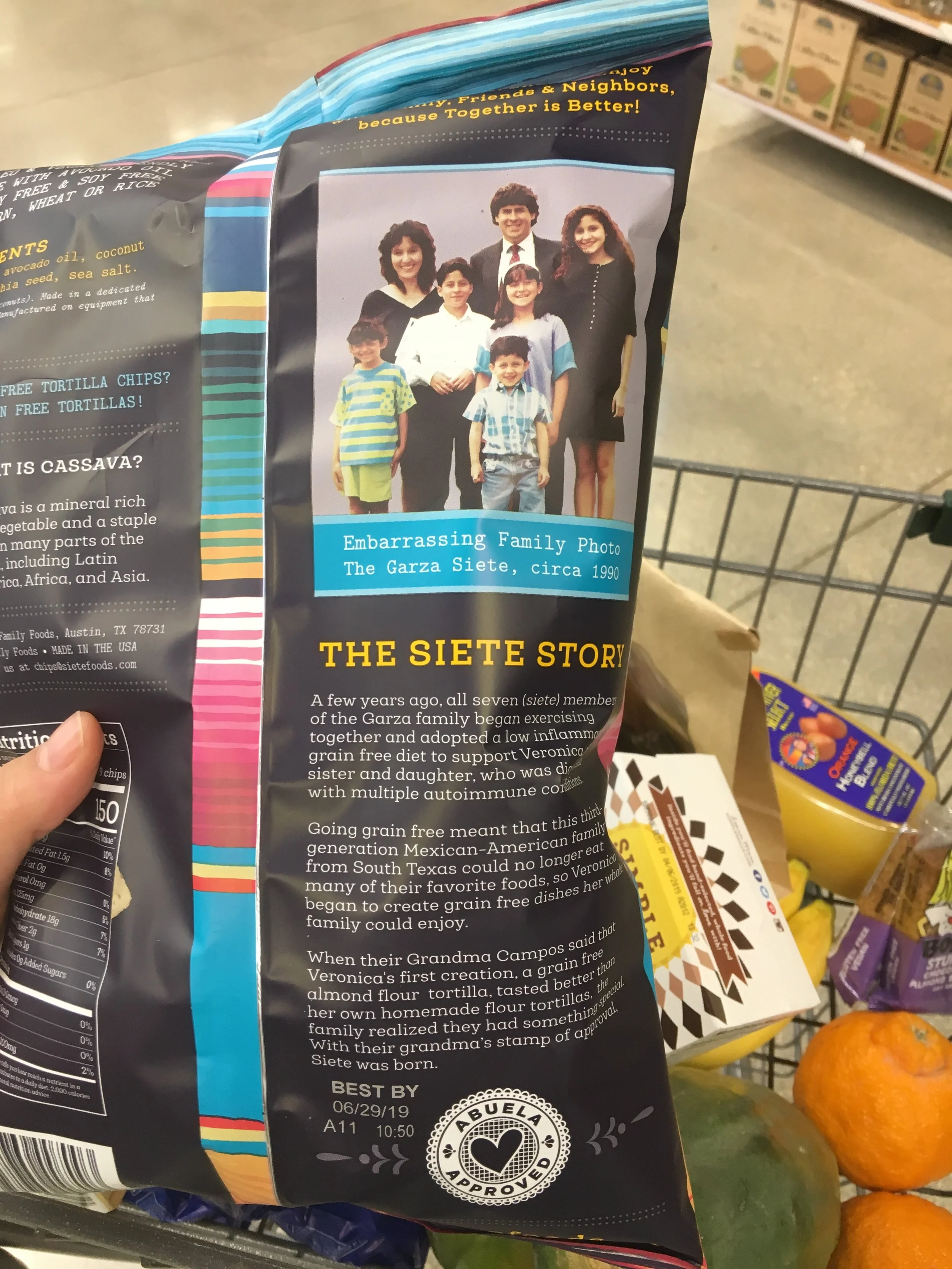
Siete brand sharing their story, family pic and all!
Take Time for Storytime
While you’re reading the labels, might as well read the stories. Whole Foods Market encourages vendors to use their packaging as a story-telling piece. Have you ever noticed? My favorite it Siete chips’ adorable story about an abuelita and her gluten intolerant granddaughter (see above). THIS is how you turn a curious customer into a loyal one. And THIS is why they pay those extra $2.
With a storytelling package you can connect with the brand, understand their values, and be better equipped to make purchasing decisions that align with your values. So please, go with time, take your time, and enjoy storytime before placing an item into your cart.
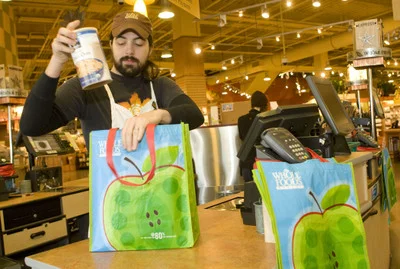
Bring your own bag and save!
Bring Your Reusable Bags
Whole Foods Market has a program called Donate Your Dime. For each reusable bag you use at check-out you can either:
Donate your dime to a local charity
Keep your dime
It goes without saying the positive impact bringing your own bag has on the environment. When you bring your reusable bags, we all win.
Tip: Leave a stash of reusable bags in your car so you never forget!
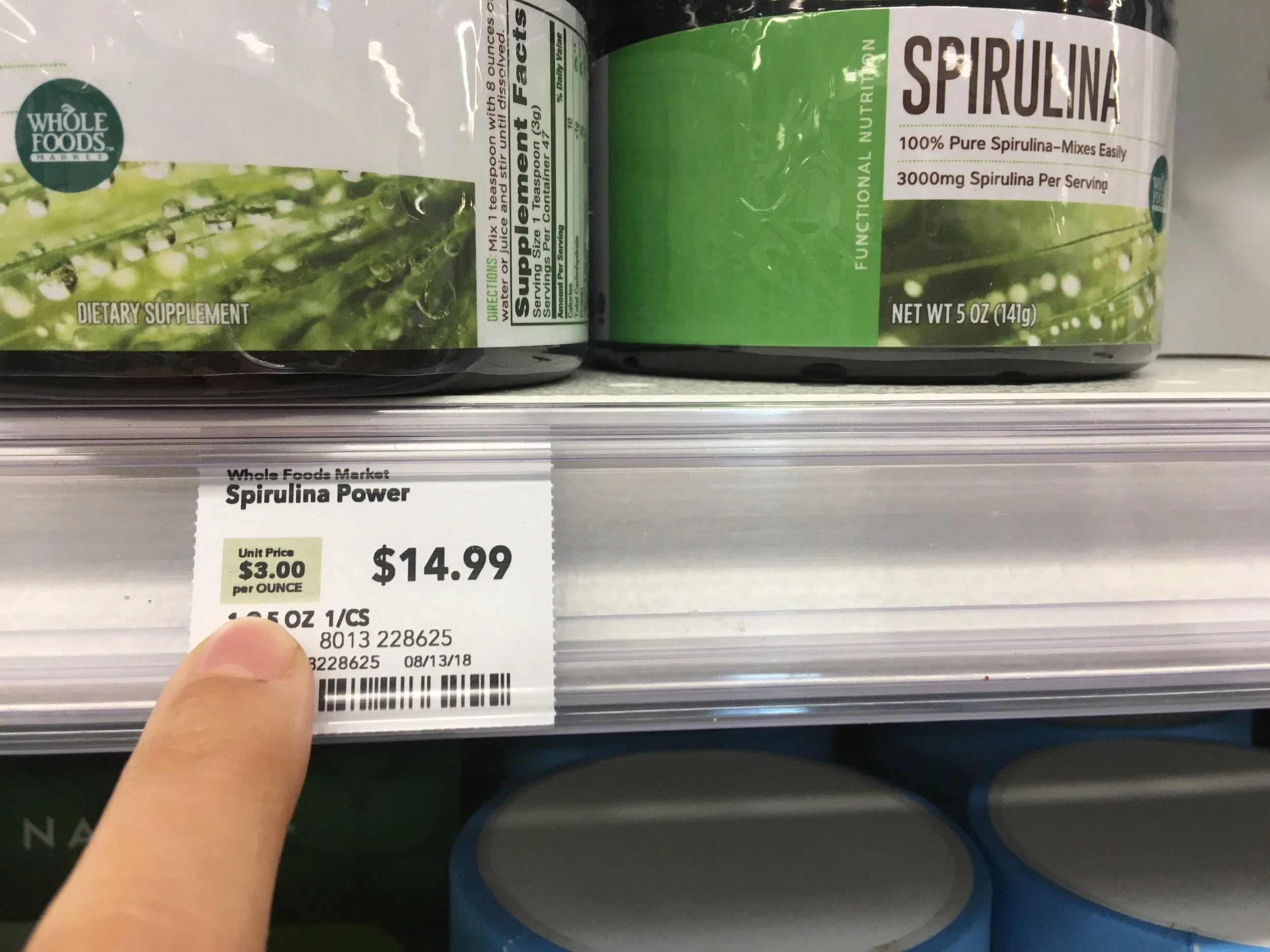
Look at the Unit Price
The price tag on the shelf actually has two prices: the regular price and the unit price. When comparing products don’t just go for the item with the cheaper regular price. Look closely at the unit price because there are many instances where at first glance a product may seem cheaper, but the unit price is higher, meaning you’re actually getting less for your money.
But don’t assume the larger package is always the best value. You have to make sure the unit of measurement is the same (ounces vs. ounces for ex.).
PS: This is the case in most grocery stores. But unit labeling is not required in all states. So really take a close look at those price tags and units of measurements.
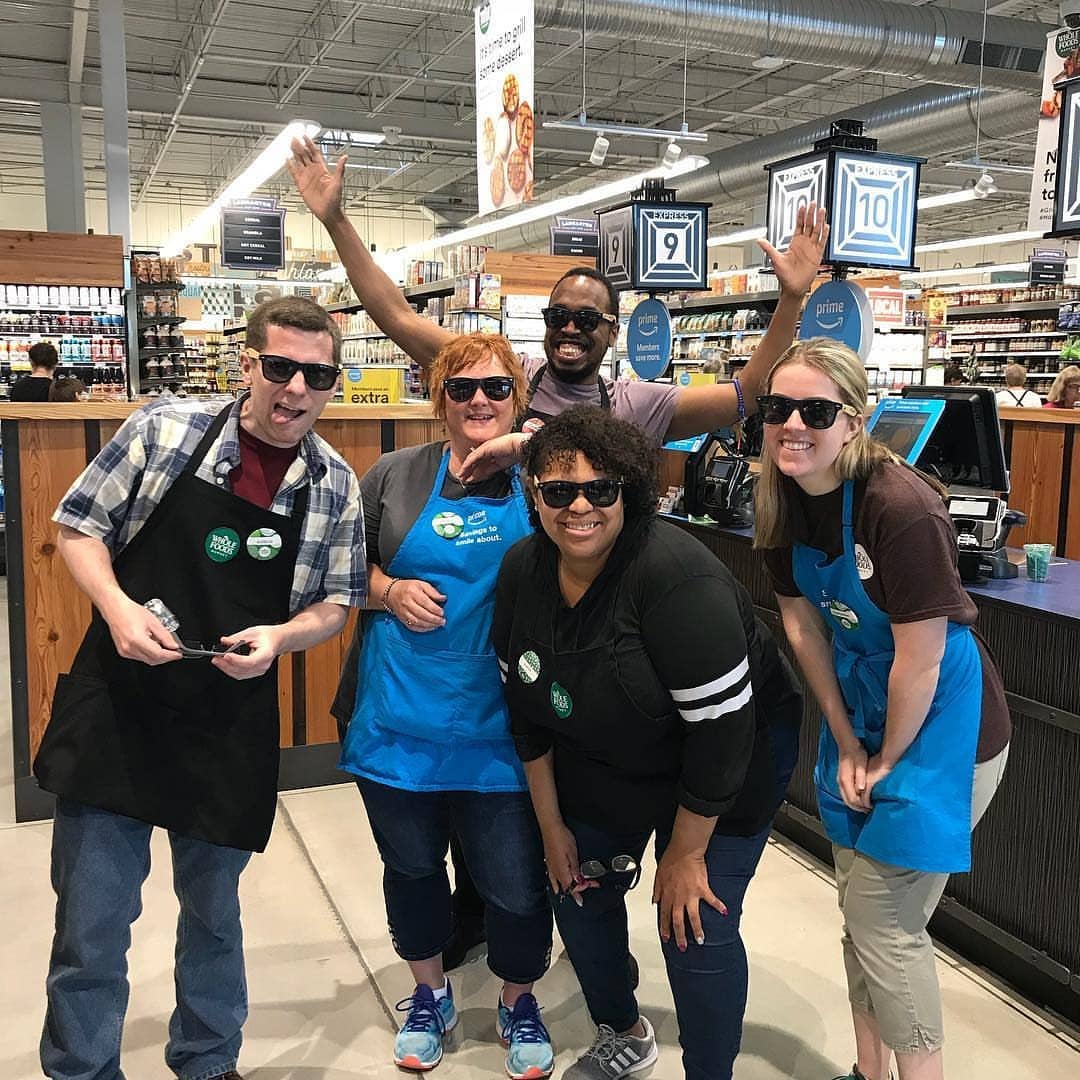
source: www.wholefoodsmarket.com
Talk to Team Members
The Team Members are what I miss most from my time with the company. They’re just awesome! And for the most part, really helpful and nice. Get to know them, ask a million questions (they’re well trained and know a lot), and make some new whole foodie friends.
If you want to try an item before purchasing, just ask. Any and all Team Members are allowed to open up an item and let customers try it. If you don’t like it, you don’t have to buy it. And if the Team Member knows what’s up, they’ll let you take the item home as a free sample. The ENTIRE item. This has happened to me a few times.
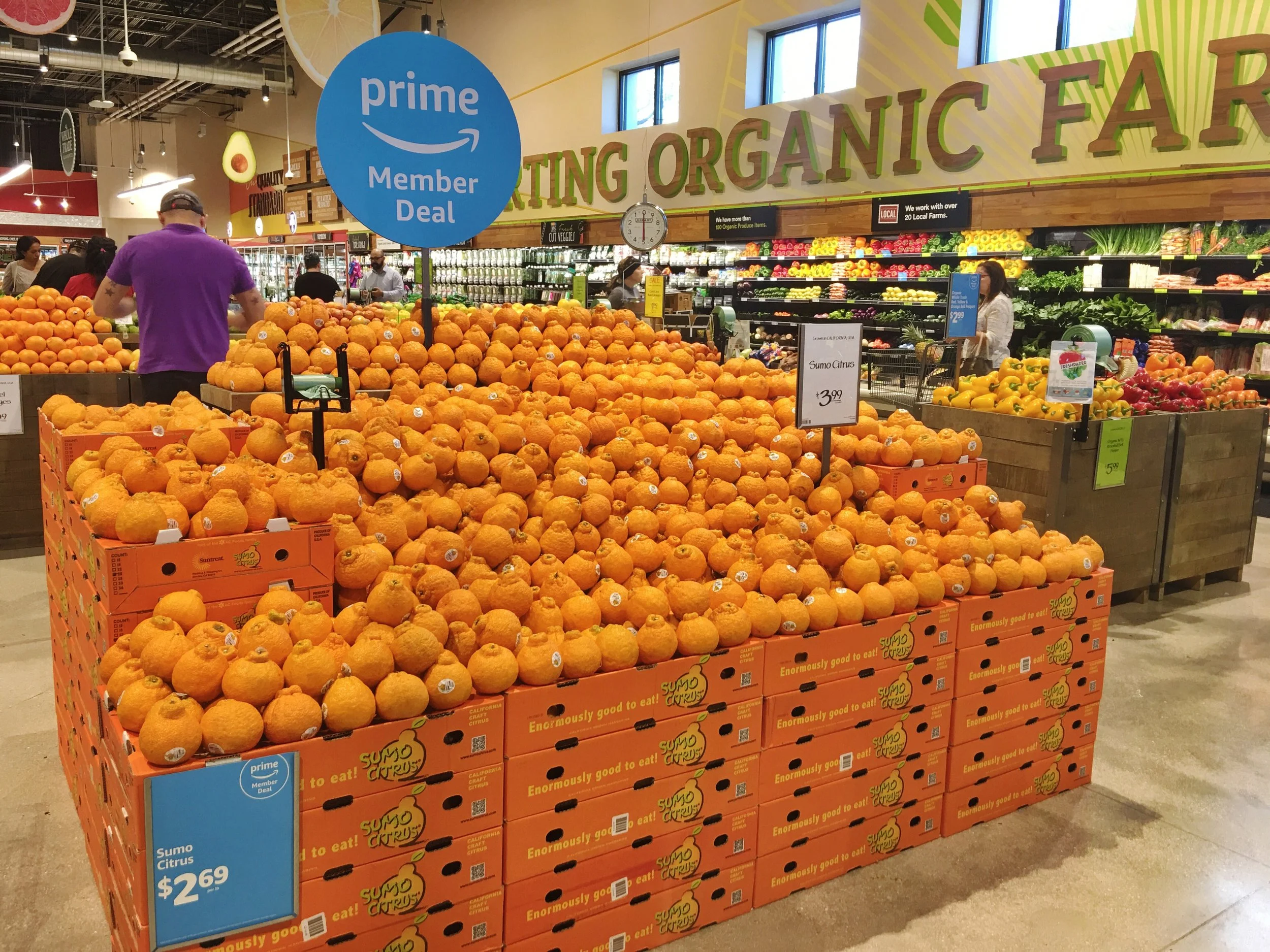
Become an Amazon Prime Member
Amazon bought Whole Foods Market in August 2017. Honestly, Whole Foods Market was struggling financially with competitors like Costco and Publix coming into the organic grocery mix. Amazon wanted to get their hands on Whole Foods Market shopping data, which is particularly helpful as they expand their online grocery business.
Purchasing a prime membership not only gets you free two-day shipping on a ton of products on Amazon, but it can save you money when shopping in store. I’ll be honest here, if you’re a habit shopper (meaning, you pretty much buy the same thing each shop, like me) you won’t see much of savings. I know what I like and I buy what I like. BUT, if you’re more open to trying all sorts of products and shop mainly sales, you will notice a nice savings at check out.
Not only do you get those exclusive blue Prime Member Deals, but you’ll save an additional 10% on all other sale items. Plus, you can shop your savings and deals online with free 2-hour delivery.
Pay the Price
I’m not going to sugar coat it. Yes, Whole Foods Market is more expensive than your average, conventional grocery store. Even with a prime membership, weekly sales and all the other tips I shared, it just is. But for good reason.
Allow me to explain.
Supply chain: represents the steps it takes to get the product or service to the customer.
As products move along that supply chain, someone has to pay the price. When we demand lower prices, those prices don’t just magically drop. Someone along the supply chain is paying that price. In a conventional retail setting, it’s usually the supplier that pays the price, forcing them to cut corners and sacrifice so that the customer saves money. Or the corporation, forcing to lay-off employees and cut-back.
The ultimate price payers are those without a voice. Mother Earth. Animals.
And in food retail, the quality of the food also pays the price. So in turn, so does your health.
Walmart is a classic example of what happens when customers demand lower prices. Employees at the forefront aren’t paid fairly, shopping experience suffers, and God knows what the labor conditions are in China.
But at Whole Foods Market, the customer typically pays the price, so that farmers are paid fair wages, team members can start at $15 an hour, and we’re guaranteed the highest quality food.
Conscious consumers choose to pay the price.
We are consciously making the choice to pay the price, so that Mother Earth, farmers, laborers, team members, and our health don’t have to. In turn, making sacrifices in other areas of our lives so that profit along the supply chain is evenly distributed.
This is why Fair Trade items are the norm at Whole Foods Market. And why they can support The Coalition of Immokalee Workers, becoming the first supermarket to sign an agreement with them to work in partnership to help improve wages and working conditions for Florida tomato pickers.
When we support conscious businesses like Whole Foods Market, we are working toward the greater good and the health of people, community and environment.
I’m going to end this post like I do most of my conscious rants:
There is no right way to shop. Or one right place to shop at.
Helping others raise their level of consciousness isn’t about guilting them into doing what you think is right.
Not everybody can afford to shop at Whole Foods Market. Some people are already sacrificing so much just to survive. I get it. Trust me, I do.
I’m also not saying Whole Foods Market is the best, most woke company in the world. We all know that’s not true. They’re imperfect, and at the end of the day the bottom line is the bottom line, whether at Whole Foods Market, Walmart, Publix, or wherever else.
If Walmart is your preference, that’s cool. But perhaps be more conscious while you’re filling up your cart. Read the labels. Bring your reusable bags. Select items with the Fair Trade logo. Buy organic. Just do the best you can and that is more than good enough.
Be conscious, be present, and know that every little and big effort is making a difference.
We need you to make conscious choices.
What are your top tips for shopping at Whole Foods Market? For shopping more consciously? Please share in the comments below. Would love to hear from you!
Thank you for reading my words.
Love,
Janelle, The Free Spirit (Conscious) Foodie